
As an Amazon Associate I earn from qualifying purchases.
Bubble algae is one of those reef-tank problems that can start with a single green bubble and slowly become difficult to deal with.
At first, you may notice only one or two shiny green bubbles attached to a piece of live rock. Over time, more can appear in cracks, around coral bases, and in areas that are difficult to reach.
The good news is that bubble algae can be controlled. You do not need to tear down your reef tank or depend on one particular animal to solve the problem. Careful removal, stable water conditions, good circulation, and regular inspection are usually a better approach.
This guide explains what bubble algae is, whether popping it can make the problem worse, which animals may eat it, how to remove it, and how to reduce the chances of it coming back.
1. What Is Bubble Algae?
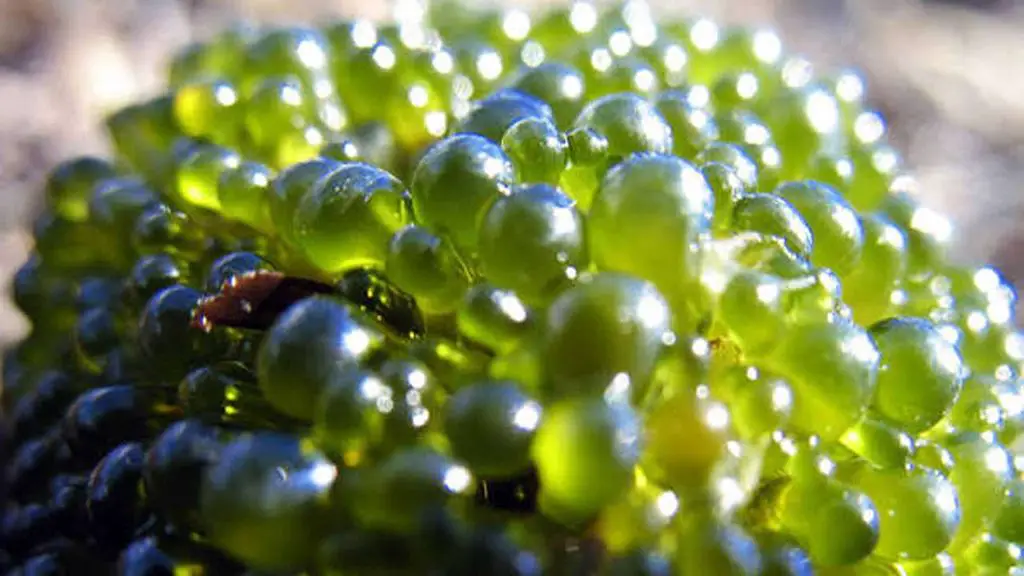
Bubble algae is a common name for several green algae that grow as round, inflated bubbles on rocks and other hard surfaces in marine aquariums.
One of the best-known species is Ventricaria ventricosa, formerly known as Valonia ventricosa. It is unusual because each visible bubble can be a single giant cell. The Smithsonian Ocean guide to Ventricaria ventricosa notes that individual bubbles can reach about 5 cm in diameter, making this species one of the largest known single-celled organisms.
That means the green bubble you see is not simply a ball made up of hundreds of small cells like an ordinary plant structure.
Ventricaria ventricosa has a coenocytic structure. In simple terms, it is a large multinucleate cell with a complex network of cytoplasm. Research has shown that the cytoplasm is divided into interconnected domains and that some of these domains can regenerate into new cells.
This unusual structure helps explain why bubble algae can behave differently from many of the other algae found in reef aquariums.
What Does Bubble Algae Look Like?
Typical bubble algae may appear as:
- Shiny green or dark-green spheres
- Smooth, almost glass-like surfaces
- Small bubbles ranging from pin-sized growths to several centimeters
- Individual bubbles or groups growing close together
- Growth attached to live rock, coral rubble, or other hard surfaces
Not every green bubble in a reef tank is necessarily the same species. Smaller bubble-forming algae can look different from the larger and more familiar Ventricaria ventricosa.
Because of this, identification by appearance alone can sometimes be difficult.
2. Why Does Bubble Algae Grow in Reef Tanks?
It is easy to blame every algae problem on high nitrate or phosphate, but the situation is not that simple.
Nitrate and phosphate are important nutrients for algae, and excess organic waste can encourage unwanted algae growth. However, bubble algae can also appear in established reef tanks where nutrient readings do not seem particularly high.
Light, available nutrients, water movement, detritus, and the surfaces available for algae to attach to can all influence what grows in an aquarium.
Instead of trying to reduce nitrate and phosphate to zero, focus on keeping them stable and measurable and make sure waste is being removed from the system.
The same idea applies to other reef-tank algae problems. For example, understanding and eliminating cyanobacteria in a reef tank involves looking at nutrients, water movement, accumulated waste, and overall tank conditions rather than focusing on one factor alone.
3. Is Bubble Algae Dangerous to Corals?
Bubble algae is usually more of a space and maintenance problem than an immediate threat to corals.
A few isolated bubbles may have little noticeable effect. The problem becomes more serious when the algae continues spreading.
Large amounts of bubble algae can:
- Take up space on live rock
- Grow around coral bases
- Shade or crowd nearby corals
- Make parts of the aquascape harder to clean
- Continue growing in cracks and other difficult-to-reach areas
For this reason, it is much easier to deal with bubble algae while the outbreak is still small.
4. Does Popping Bubble Algae Spread It?
This is one of the most common questions about bubble algae.
The short answer is:
Popping a bubble does not mean that your entire aquarium will automatically become covered in new bubbles. However, deliberately bursting bubble algae inside the display tank is still best avoided.
There is a biological reason for this advice.
Ventricaria ventricosa has an unusual ability to reorganize its cytoplasm after being damaged. Research has shown that when the large cell is cut, the cytoplasm can contract and separate into smaller structures called protoplasts. These can develop cell walls and regenerate.
Another study found that emera,ld crabs can tear the algae apart and release cell material containing juvenile cytoplasmic spheres into the water. The researchers suggested that this may contribute to the dispersal of the algae.
This does not mean that every bubble you accidentally break will create a new infestation.
The popular claim that one popped bubble releases millions of spores and guarantees an outbreak is an exaggeration.
The practical advice is much simpler:
If you can remove the bubble without bursting it, do that.
5. How to Remove Bubble Algae Manually
For a small or moderate outbreak, removing the bubbles by hand is usually the best place to start.
The aim is to remove the visible bubble and as much of its attachment as reasonably possible without spreading pieces around the aquarium.
5.1 Remove the Rock If Possible
If the affected rock can be removed without disturbing your corals or aquascape, take it out of the tank.
Place it in a container containing water from the aquarium.
Working outside the display makes it much easier to control loose pieces and clean the affected area.
5.2 Use Tweezers or Pliers
For individual bubbles, reef-safe tweezers or narrow pliers can help you get underneath the bubble and gently pull it away from the rock.
Take your time.
The aim is to remove the bubble rather than crush it.
5.3 Remove the Attachment Point
Some bubble algae can attach firmly to the rock.
Removing only the visible bubble may allow growth to return if part of the organism remains attached.
You do not need to remove a large piece of live rock. Carefully scrape or clean the small area where the bubble was attached when possible.
5.4 Siphon While You Work
If the rock cannot be removed, place a siphon close to the bubble while you work.
This can help collect loose pieces before they move elsewhere in the tank.
For many situations, a simple siphon is more useful than buying a specialized bubble-algae removal tool.
5.5 Check the Tank Again
Do not expect one cleaning session to remove every bubble.
Look through the rockwork regularly and remove new bubbles while they are still small.
Removing a few new bubbles every week is much easier than waiting several months and dealing with a large colony.
6. Should You Use a Toothbrush?
A toothbrush can be useful for cleaning algae from hard surfaces, but it is not always the best tool for removing bubble algae.
Brushing too aggressively can break the bubbles and spread pieces around the aquarium.
If you use a toothbrush, it is better suited to cleaning the surrounding rock after the larger bubbles have been removed. For intact bubbles, tweezers, forceps, or careful hand removal are usually better choices.
7. Do Emerald Crabs Eat Bubble Algae?
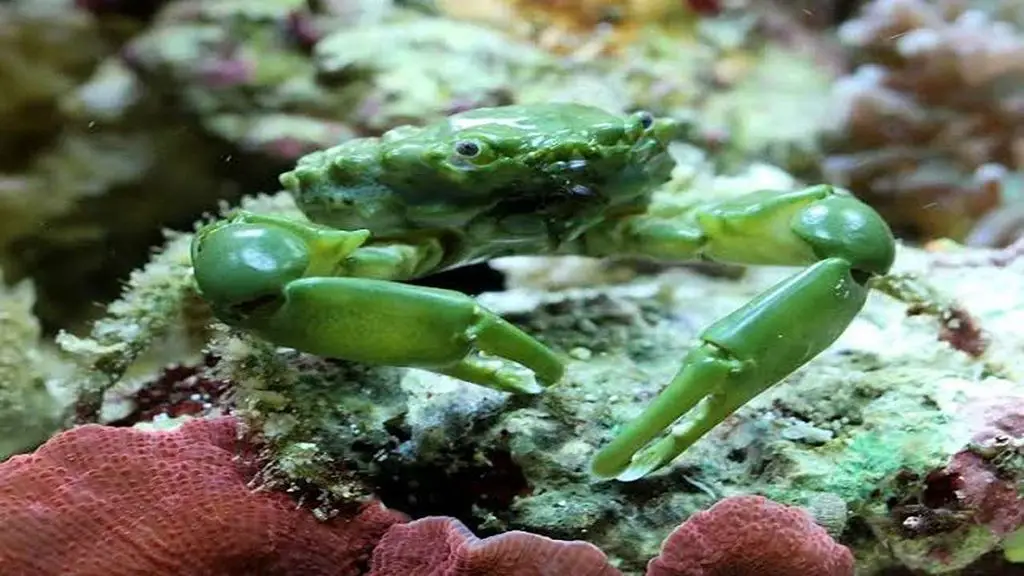
Yes, some emerald crabs (Mithraculus sculptus) will eat bubble algae.
However, they should not be considered a guaranteed solution.
A peer-reviewed study specifically examined emerald crabs and Ventricaria ventricosa. The researchers found that medium and large crabs consumed more bubble algae than smaller crabs. They also found that the crabs often chose other available foods before bubble algae. Pellet food, in particular, reduced the amount of bubble algae they consumed.
This is important because adding an emerald crab does not mean it will immediately remove every bubble from your aquarium.
Its behavior can depend on:
- The individual crab
- Its size
- The amount of bubble algae present
- Other food available in the tank
- The size and layout of the aquarium
Emerald crabs can help, but they work best alongside regular aquarium maintenance rather than being relied upon to solve the entire problem.
An Important Warning About Emerald Crabs
Emerald crabs are omnivores, and individual crabs can behave differently.
Do not add a large number of them simply because you have bubble algae.
Choose an appropriate number for your aquarium and watch their behavior after introducing them, particularly if you keep small corals or other animals that could potentially be disturbed.
8. Will Pitho Crabs Eat Bubble Algae?
Pitho crabs are another type of crab sometimes recommended for algae problems in marine aquariums.
However, there is much less specific research showing how consistently Pitho crabs control Ventricaria ventricosa in home reef tanks compared with the research available for emerald crabs.
For that reason, it would be misleading to say that Pitho crabs are definitely better at removing bubble algae.
If you decide to keep one, consider its overall care requirements and behavior rather than buying it only for bubble-algae control.
9. What About Rabbitfish and Foxface?
Rabbitfish, including Foxface species, are active algae eaters and can be useful in larger marine aquariums.
However, buying a rabbitfish specifically to remove bubble algae is not a good idea.
These fish grow relatively large and have their own requirements for tank size, food, swimming space, and compatibility with other fish.
If you already have a suitable aquarium and want a rabbitfish for its overall algae-eating behavior, it may help with algae in the tank. But it should not be treated as a dedicated bubble-algae solution.
The same applies to tangs.
Some herbivorous fish may pick at algae around the bubbles, but they are not reliable bubble-algae removers.
10. Can Urchins Remove Bubble Algae?
Urchins are good algae eaters, but their effect on bubble algae can vary.
They may remove algae from rock surfaces and disturb small growth while moving around the aquarium. However, they should not be purchased specifically to get rid of bubble algae.
They can be useful additions to some reef aquariums, but they should not replace regular cleaning and maintenance.
11. Does Feeding Affect Bubble Algae Control?
This is particularly relevant if you are using emerald crabs.
The study on Mithraculus sculptus found that the crabs often chose other available foods before bubble algae. Pellet food, in particular, reduced their consumption of bubble algae in the experiments.
That does not mean you should starve your animals.
Feed them properly and avoid excessive feeding. If a crab has plenty of other food available, it may simply have less reason to eat the bubble algae.
12. Can Hydrogen Peroxide Kill Bubble Algae?
Hydrogen peroxide is sometimes used by reef keepers as a spot treatment for unwanted algae.
However, it needs to be used carefully.
Hydrogen peroxide is not selective. If it is applied incorrectly or in excessive amounts, it can harm organisms that you want to keep.
For this reason, peroxide is better treated as an optional treatment rather than the first solution for bubble algae.
If the affected rock can safely be removed, treating the rock outside the display reduces the chance of exposing corals and other animals to the chemical.
For a small outbreak, physically removing the bubbles is usually simpler and easier to control.
13. Should You Use Commercial Algaecides?
Commercial algae treatments should generally not be the first thing you reach for.
Some products can affect organisms other than the algae you are trying to remove. That is particularly important in reef aquariums because the tank contains corals, bacteria, invertebrates, and other organisms that depend on stable conditions.
Before using an algae treatment, first:
- Remove the visible bubbles.
- Remove accumulated detritus.
- Check nitrate and phosphate.
- Look for areas with poor circulation.
- Review how much you are feeding.
- Inspect new additions.
- Continue removing new bubbles as they appear.
If the conditions that allow the algae to grow remain unchanged, treating the algae alone may not solve the problem.
14. How to Prevent Bubble Algae From Entering Your Reef Tank
Preventing bubble algae from entering the aquarium is much easier than removing an established outbreak.
New live material can introduce unwanted algae, including:
- Live rock
- Coral frags
- Frag plugs
- Coral bases
- Rock rubble
- Equipment moved from another aquarium
14.1 Inspect Every New Coral
Before putting a new coral into your display tank, carefully inspect the frag plug and underside of the coral.
Look for tiny green bubbles hiding in cracks or underneath the plug.
A bubble that is only a few millimeters across is much easier to remove than one that has already spread throughout your aquascape.
14.2 Consider Coral Quarantine
A quarantine tank gives you time to observe new corals before they enter your main aquarium.
It can help you find unwanted algae and other hitchhikers before they become established in the display.
You do not necessarily need an expensive setup. The important part is keeping new additions separate while you inspect and monitor them.
14.3 Clean Frag Plugs Carefully
If practical, remove unnecessary parts of a frag plug before adding the coral to your display.
Inspect the remaining material carefully under good lighting.
Even corals purchased from reputable sellers can occasionally carry tiny pieces of algae that are easy to miss.
15. Control Nutrients Without Chasing Zero
One common mistake when dealing with algae is trying to remove every trace of nitrate and phosphate.
That can create other problems.
Corals and other organisms need nutrients, and a healthy reef aquarium does not need to have completely undetectable nitrate and phosphate.
Instead:
- Feed your fish and other animals appropriately.
- Avoid putting more food into the tank than necessary.
- Remove trapped waste and detritus.
- Keep mechanical filtration working properly.
- Maintain your protein skimmer.
- Perform appropriate water changes.
- Test nitrate and phosphate regularly.
- Avoid sudden and extreme changes to water chemistry.
The goal is stable water conditions rather than trying to make the aquarium completely free of nutrients.
16. Improve Water Flow
Bubble algae can grow in protected areas where waste and detritus collect.
Check behind rocks, underneath overhangs, around coral bases, and in other areas where water movement is weak.
You do not need extremely strong flow everywhere in the aquarium.
Instead, look for places where debris settles and adjust your powerheads or circulation pattern so that waste can move toward your filtration system.
This is also useful when dealing with cyanobacteria.
17. Could Macroalgae Help With Nutrient Control?
Macro algae can help with nutrient export when it is actively growing.
For example, Dragon’s Breath macroalgae (Halymenia durvillei) is used in some reef aquariums and refugiums. As it grows, it takes up nutrients from the water. Removing some of the growing macroalgae then removes those nutrients from the aquarium.
Dragon’s Breath is not a treatment for bubble algae itself, and adding it will not make an existing outbreak disappear. It can, however, be part of a broader approach to maintaining nutrient levels in a reef aquarium.
18. Bubble Algae vs. Cyanobacteria: Don’t Confuse Them
Not every unusual growth in a reef tank is bubble algae.
Cyanobacteria, for example, is a group of photosynthetic bacteria rather than true algae. It often appears as a slimy sheet or mat rather than individual, firm green bubbles.
If you see a red, purple, dark-green, or slimy layer spreading across your sand or rocks, you may be dealing with cyanobacteria instead.
Learn how to identify and eliminate cyanobacteria in a reef tank before treating the problem, since its causes and treatment can be different from those of bubble algae.
Correct identification matters because treating the wrong problem can waste time and may create unnecessary changes in your aquarium.
19. A Simple Bubble Algae Removal Plan
If you only have a few bubbles:
Step 1: Remove the affected rock if practical.
Step 2: Carefully remove the bubbles without bursting them.
Step 3: Remove as much of the attachment as reasonably possible.
Step 4: Siphon loose pieces and debris.
Step 5: Return the cleaned rock to the aquarium.
Step 6: Inspect the rest of the tank for smaller bubbles.
Step 7: Look for areas where detritus is collecting.
Step 8: Check the tank again every week.
If the infestation is larger, continue with regular manual removal and consider suitable algae-eating animals while improving control of nutrients, waste, and water movement.
Do not expect one cleaning session to solve a large outbreak.
Final Thoughts
Bubble algae can be frustrating, but it does not have to become a permanent problem in your reef tank.
The biggest mistake is looking for one animal, chemical, or tool that will make the algae disappear. There is no guaranteed shortcut.
For a small outbreak, carefully remove the bubbles and avoid deliberately bursting them. For a larger outbreak, continue removing new growth and pay attention to nutrients, waste, water movement, and anything you are adding to the aquarium.
Keep an eye on nitrate and phosphate, improve circulation where waste collects, and inspect every new coral or piece of live rock before adding it to your display.
Most importantly, keep checking the tank.
Removing ten small bubbles today is much easier than trying to remove hundreds several months later.
With regular maintenance and early action, bubble algae can be kept under control without tearing apart your entire reef aquarium.
Frequently Asked Questions:
Usually, bubble algae is more of a nuisance than an immediate danger. A few bubbles may cause little trouble, but larger colonies can occupy rockwork and grow around corals.
It is better not to deliberately pop it inside the display tank. Ventricaria ventricosa can regenerate from cytoplasmic material after the cell is damaged, which is one reason careful removal is preferable.
Not necessarily. Emerald crabs can eat bubble algae, but their effectiveness varies. Research also shows that they may choose other available foods instead, especially pellets.
For a small outbreak, carefully removing the bubbles by hand is usually the simplest and most controllable method. Larger outbreaks may require repeated removal together with suitable algae-eating animals and better aquarium maintenance.
High phosphate can contribute to algae growth, but it is too simple to say that phosphate alone causes bubble algae. Nutrients, light, water changes or movement, available surfaces, and organic waste can all influence algae growth.
Yes. Small bubbles can easily be missed, especially in cracks, underneath rocks, and around coral bases. Regular inspection is important after the initial removal.
Amazon and the Amazon logo are trademarks of Amazon.com, Inc, or its affiliates