
As an Amazon Associate I earn from qualifying purchases.
Algae is usually treated as the problem. Green water, buildup in tanks, sudden blooms that seem to show up overnight.
So the first instinct is simple. Add a filter and clear it out.
But algae doesn’t work like debris. It grows. It feeds on nutrients, light, and whatever the system is already allowing.
That’s why some filters seem to work, and others don’t change much at all.
Some systems remove algae directly. Others don’t remove it at all; they limit the conditions that let it grow. And then some setups use algae itself to control excess nutrients.
It sounds contradictory at first. But that’s where most of the confusion around algae filters comes from.
This guide breaks that down. What different filters actually do, where they help, and why fixing algae usually takes more than just adding one piece of equipment.
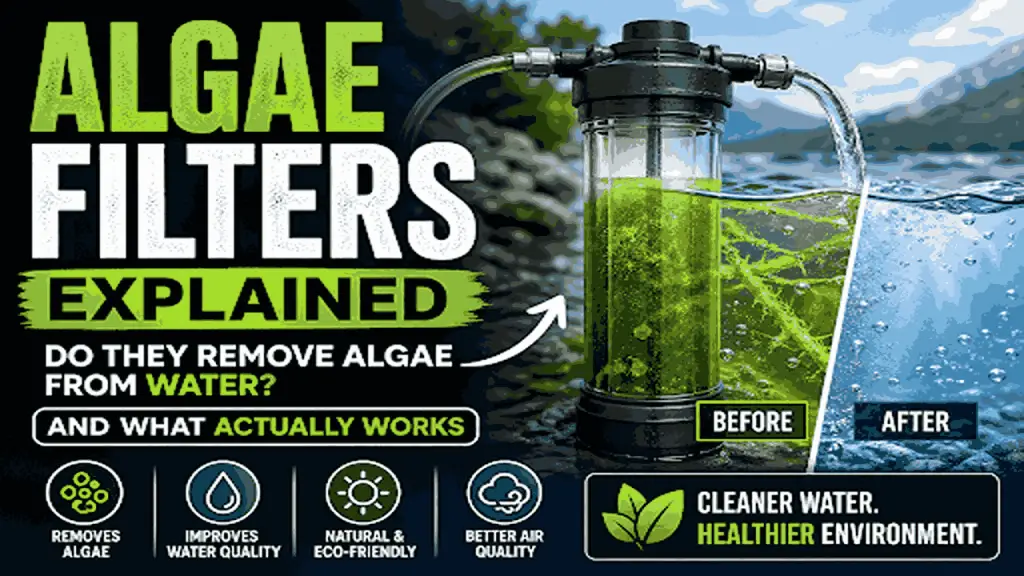
1. Types of Portable Algae Filters
Not every filter deals with algae the same way.
Some remove it and some control it. Some just improve the conditions so it doesn’t take over again.
That difference is where most setups either work or fail.
1.1 Backpacking Water Filters
These are built for safety, not clarity.
Most backpacking water filters can remove bacteria and some microalgae, but they don’t reliably deal with harmful algal blooms or cyanotoxins. If the water has contamination from cyanobacteria, filtration alone isn’t enough.
That’s where people get caught off guard.
Clear water doesn’t always mean safe water.
1.2 Bio-Filters for Water and Air
Bio-filters don’t remove algae directly. They change the environment.
In water systems, beneficial bacteria break down waste before it turns into nutrients that feed algae. In air systems, microalgae setups are used to absorb CO2 and improve air quality.
It’s slower, but more stable over time.
1.3 IceCap Turf Scrubber Systems
This is where algae is used against itself.
Turf scrubbers grow algae in a controlled area, usually with strong light and flow. That algae absorbs excess nutrients, which limits unwanted algae elsewhere in the system.
You’re not removing algae. You’re redirecting it.
It works well, but only when maintained properly.
1.4 Blade Hybrid Algae Reactors
These are more controlled systems.
They combine flow, light, and surface area to grow algae in a contained unit. Similar to scrubbers, but more compact and often used in advanced aquarium setups.
Again, the goal isn’t direct removal.
It’s nutrient control, which leads to less algae where you don’t want it.
That covers the main types. Next is where things usually click:
How these filters actually work, and why some of them don’t solve the problem on their own.
2. How Algae Filters Work
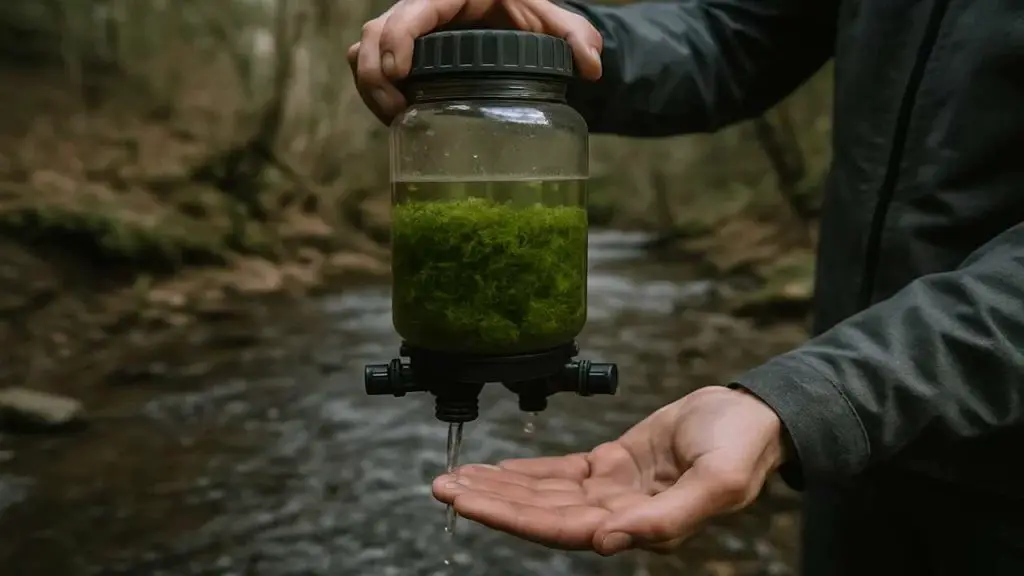
They don’t all work the same way.
Some remove and break things down. Some just shift the balance so algae can’t take over.
That’s the part most people miss.
2.1 Mechanisms of Contaminant Removal
Different filters target different things.
| Method | What it does | Where it works |
| Mechanical filtration | Traps particles, debris, some algae | Fish tanks, ponds |
| UV light | Disrupts free-floating algae (green water) | Water filtration units |
| Biological filtration | Uses bacteria to break down waste | Aquariums, freshwater systems |
| Activated carbon filters | Reduces chemicals, odor, some pollutants | Drinking water systems |
Not all algae is removable the same way.
Green water responds to UV. Attached algae doesn’t.
And toxins from harmful algal blooms? Most filters don’t remove those.
2.2 Advantages of Living Technology
This is where algae-based systems come in.
Instead of removing algae directly, they control nutrients.
- Less nitrogen and phosphate
- More stable oxygen levels
- Slower algae growth overall
It’s not instant.
But it holds longer because you’re changing the system, not just cleaning it.
2.3 Enhancing Indoor Air Quality
Some systems go beyond water.
Microalgae setups are used to improve air quality by absorbing CO2 and releasing oxygen through photosynthesis.
They can also help with:
- airborne particles
- volatile organic compounds (to a limited extent)
Still early for most homes.
But the idea is simple. Use living systems instead of just filters and fans.
That’s how they work in practice. Next is where they’re actually used:
From outdoor water use to indoor systems and larger setups.
3. Applications of Portable Algae Filters
Where these systems work depends on what you expect from them.
Some are built for safety and control, and some for long-term balance.
3.1 Outdoor Adventure and Backcountry Use
This is where expectations matter most.
Backpacking filters can improve water quality. They remove bacteria, particles, and some microalgae.
But they don’t reliably remove cyanotoxins from harmful algal blooms.
So even if the water looks clear, it isn’t always safe.
That’s the gap most people miss.
3.2 Indoor Air Purification
Algae-based air systems are still new.
They use microalgae to absorb CO2 and release oxygen through photosynthesis. Some setups also target airborne particles and light pollutants.
It’s not a replacement for standard air purifiers yet.
More of a complementary system.
3.3 Industrial and Urban Implementations
This is where it scales.
Algae systems are used in wastewater treatment, urban water filtration, and experimental air quality setups in cities.
They help reduce pollutants, manage nutrient loads, and support more sustainable water systems.
Still evolving. But already in use in some controlled environments.
4. Benefits of Using Algae Filters
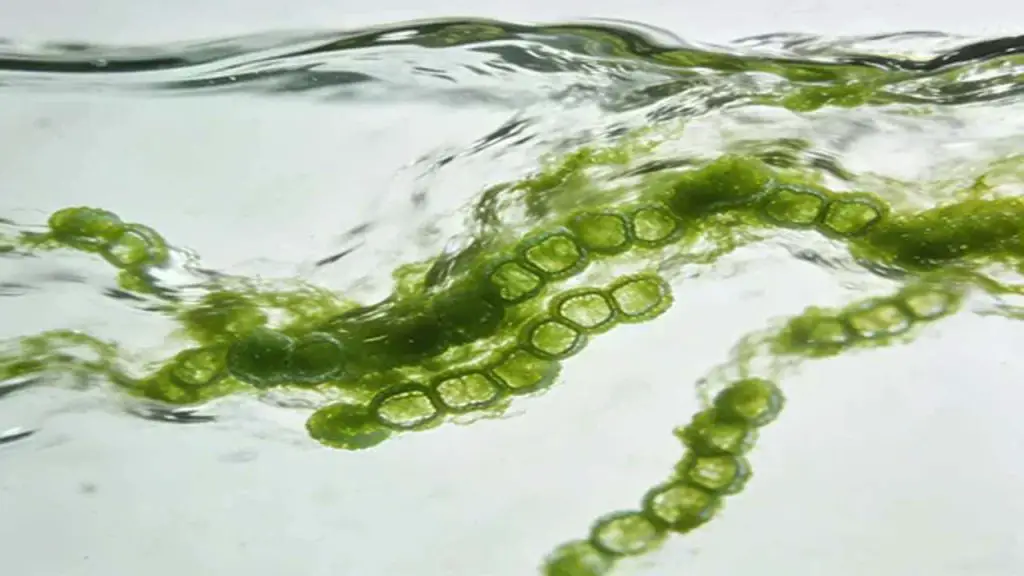
The benefits aren’t always immediate.
But they show up over time.
4.1 Improved Water Quality
Less nutrient buildup. Better balance.
That means fewer algal blooms, clearer water, and more stable systems.
Especially in aquariums, ponds, and freshwater setups.
4.2 Enhanced Air Purification
In air systems, the benefit is gradual.
Lower CO2 levels, small improvements in air quality, and a more natural filtration process.
Not dramatic. But noticeable over time.
4.3 Contributions to Overall Well-Being
Cleaner water. Better air.
Less reliance on chemicals.
It’s not a direct health product, but it supports healthier environments.
5. Selecting the Right Algae Filter System
This is where most decisions go wrong.
People choose based on the name, not the problem.
5.1 Factors to Consider for Water Treatment
Start with what you’re dealing with.
- Green water → UV light works best
- Surface or string algae → manual removal + nutrient control
- General imbalance → biological filtration
Flow rate, tank size, and filtration capacity matter more than brand.
5.2 Considerations for Air Quality Enhancement
For air systems, expectations should be realistic.
These systems support air quality. They don’t replace traditional air purifiers.
Placement, light exposure, and maintenance all affect performance.
5.3 Suitability for Different Environments
A fish tank setup won’t work for a pond.
A pond system won’t scale to industrial use.
Matching the system to the environment matters more than the technology itself.
6. The Future of Algae-Based Technologies
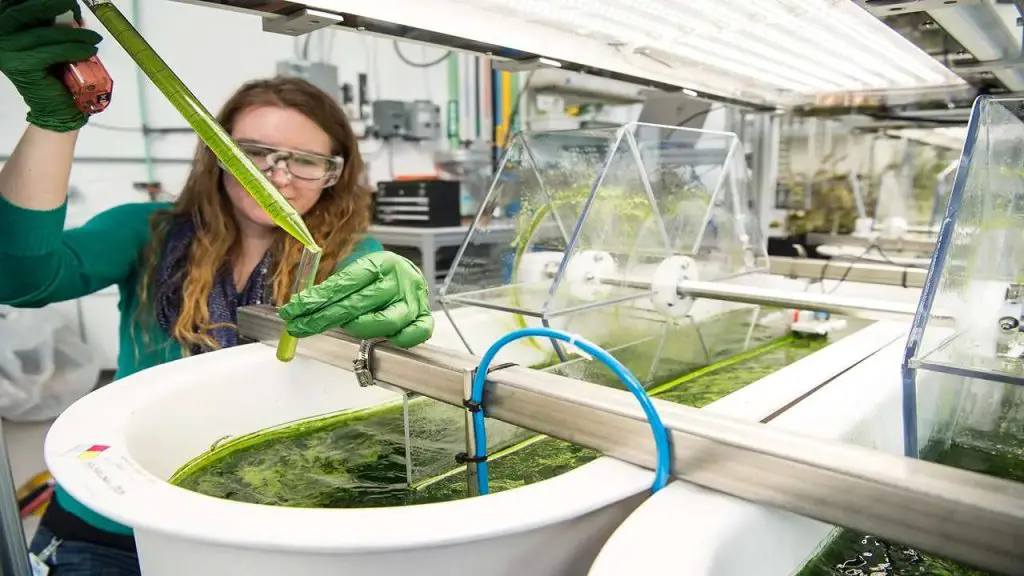
This space is still developing.
And moving faster than most people realize.
6.1 Innovations in Algae Filter Design
New systems are becoming more compact and controlled.
Better flow design. Improved light exposure. More efficient nutrient removal.
Less guesswork than older setups.
6.2 Potential for Pollution-Free Environments
Algae has the potential to reduce reliance on chemical treatments.
Water purification, air filtration, even carbon capture.
Still early. But the direction is clear.
6.3 Integration of Nature and Technology
This is the bigger shift.
Instead of forcing systems to work against nature, these setups work with it.
Using biological processes to solve problems that filters alone can’t fully handle.
Conclusion
Algae filters aren’t as simple as they sound.
Some remove algae or control it and some don’t touch it directly at all.
That’s where most confusion comes from.
If you’re expecting a single filter to fix everything, it usually won’t.
What works is understanding the system. Nutrients, light, filtration, and how they all connect.
Once that’s in place, the right combination of filters and methods actually starts to hold.
FAQ’s:
It depends on the type.
UV sterilizers work best for green water. Biological filters help prevent algae growth over time. No single filter handles everything.
Some can, but not all.
Mechanical filters remove particles. UV light targets free-floating algae. But attached algae and nutrient-driven growth need more than just filtration.
UV filtration is the most effective for green water.
Combined with proper water quality management, it clears and helps prevent it from coming back.
They can help, but they’re still developing.
They support air quality by absorbing CO2 and releasing oxygen, but they don’t replace traditional air purifiers yet.
Amazon and the Amazon logo are trademarks of Amazon.com, Inc, or its affiliates