
As an Amazon Associate I earn from qualifying purchases.
They can. Honestly, most planted aquariums today run on LED lighting with little trouble.
Plants like Anubias, Java fern, hornwort, Java moss, and Water Sprite grow under LEDs every day in regular home tanks. You do not need some massive, high-end aquascaping setup just to keep plants alive.
Where people usually run into problems is in balance.
Too much light, weak substrate, poor fertilizer, long lighting hours, all of that can push algae faster than plant growth. And sometimes the issue is not the LED light at all.
The plants just are not getting what they need from the rest of the aquarium.
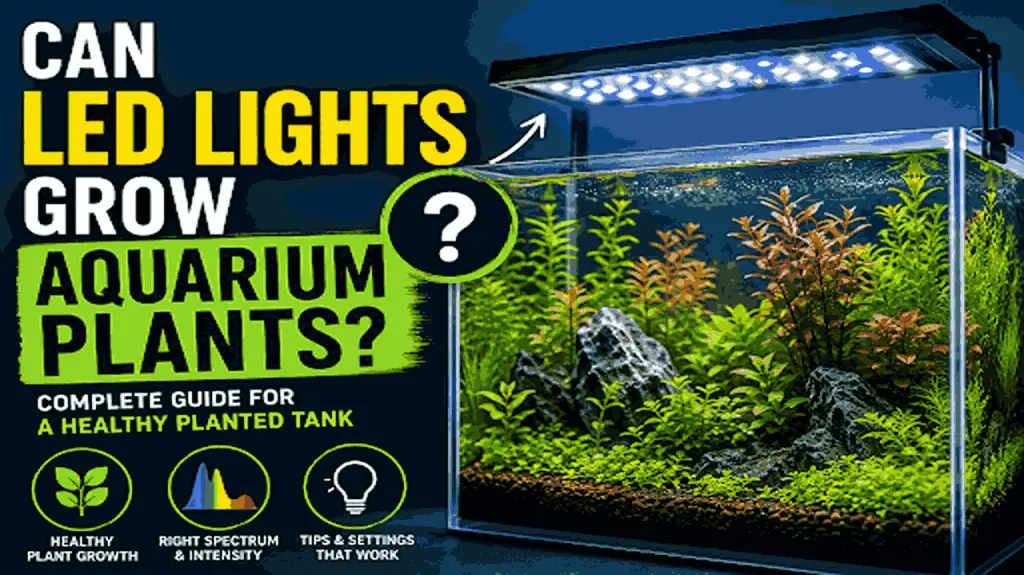
1. Assessing the Importance of LED Lighting
Lighting changes everything in a planted aquarium.
Plants can survive weak lighting for a while. They usually do not grow well in it, though.
Leaves stay smaller. Growth slows down. Colors fade. Some plants start melting back completely.
And oddly enough, too much light creates problems, too.
A strong LED light over an unbalanced planted tank usually grows algae faster than plants.
1.1 Understanding the Role of Light in Plant Growth
Aquarium plants use light for photosynthesis.
That is what powers new growth inside the tank.
Without enough usable light, plants struggle to:
- Grow new leaves
- Spread roots
- Maintain color
- Stay healthy long term
Some aquarium plants tolerate lower light pretty easily. Anubias, Java fern, hornwort, and Java moss are good examples.
More demanding aquascaping plants usually need stronger light intensity and better balance overall.
1.2 Benefits of LED Lighting for Aquatic Plants
LED aquarium lights made planted tanks much simpler for most hobbyists.
They run cooler, use less electricity, and last far longer than older fluorescent setups.
Modern LEDs also make it easier to adjust:
- Brightness
- Lighting hours
- Color temperature
- Light spread
- Overall intensity
And for most planted aquariums, good LED lights grow aquarium plants perfectly well without needing expensive commercial systems.
2. Evaluating Color Spectrum
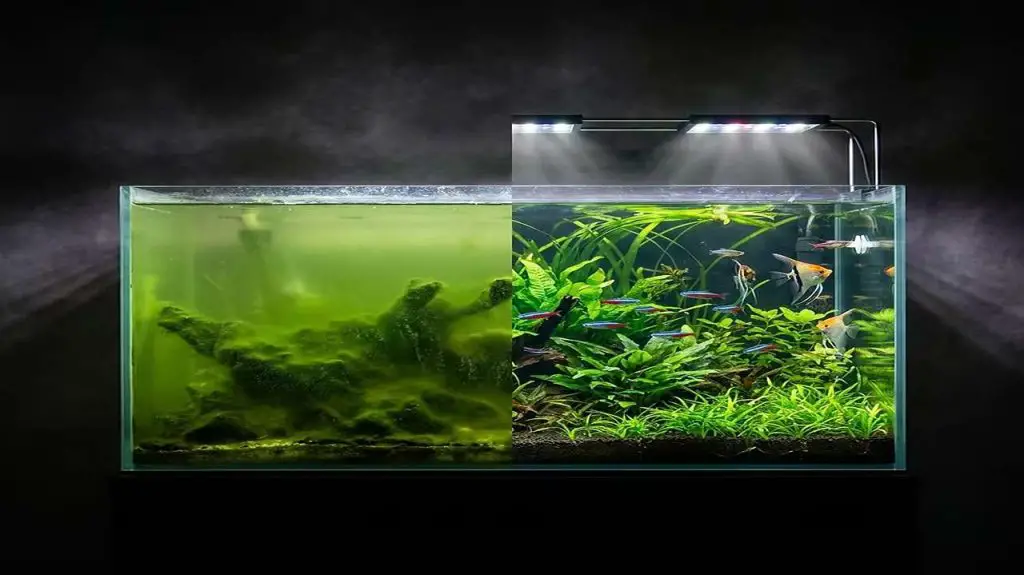
Not all aquarium lights look the same to plants.
Some grow plants well. Others mostly just make the tank look brighter to us.
2.1 Identifying the Right Wavelengths
Aquarium plants respond most to red and blue wavelengths during photosynthesis.
That is why planted aquarium lights usually mix white LEDs with extra red and blue LED output underneath.
Color temperature matters too.
Most planted tanks stay somewhere between:
- 6500K
- 7000K
- Natural daylight ranges
That usually gives aquarium plants a usable spectrum without making the tank look overly blue or purple.
2.2 The Relationship Between Color Spectrum and Plant Types
Different aquarium plants react differently to the lighting spectrum and intensity.
Low-light plants like:
- Anubias
- Java fern
- Bucephalandra
- Java moss
Usually stay fine under moderate white LED lighting.
More demanding plants, especially red plants used in aquascaping, often respond better once stronger red wavelengths and higher intensity enter the setup.
But the spectrum alone will not fix weak growth if the rest of the planted tank stays unbalanced.
And once the spectrum is handled properly, light intensity becomes the next thing that starts affecting plant growth fast.
3. Determining Light Intensity
Spectrum gets most of the attention. Intensity is usually what actually causes problems.
Too little and plants stall. Too much without CO2 and fertilizer, and algae takes over before plants get a chance.
3.1 Factors Influencing Light Intensity Needs
A few things determine how much intensity your planted tank actually needs.
Tank depth matters a lot. Light loses strength as it moves through water. What reads as strong at the surface can be quite weak by the time it reaches the substrate in a deeper aquarium.
Aquarium dimensions affect the spread, too. A light built for a 24-inch tank will not adequately cover a 36-inch footprint, even at full brightness.
Plant placement makes a difference as well. Floating plants like hornwort and Water Sprite intercept a lot of light before it reaches the lower layers.
Shade-tolerant plants handle that fine. Highlight plants underneath them usually do not.
Substrate choice plays a role, too.
A dirted tank or a proper aquarium substrate with nutrients tends to support faster plant growth, which means plants can actually use the light more effectively.
3.2 Establishing the Connection Between Intensity and Photosynthesis
Plants need enough light to support photosynthesis.
Too little and growth slows down.
Too much algae often takes advantage before the plants can.
That is why aquarium light intensity works best when it matches the needs of the plants rather than simply being turned up to maximum.
Once intensity is sorted out, the next challenge is making sure that light reaches the entire aquarium evenly.
4. Ensuring Adequate Light Spread
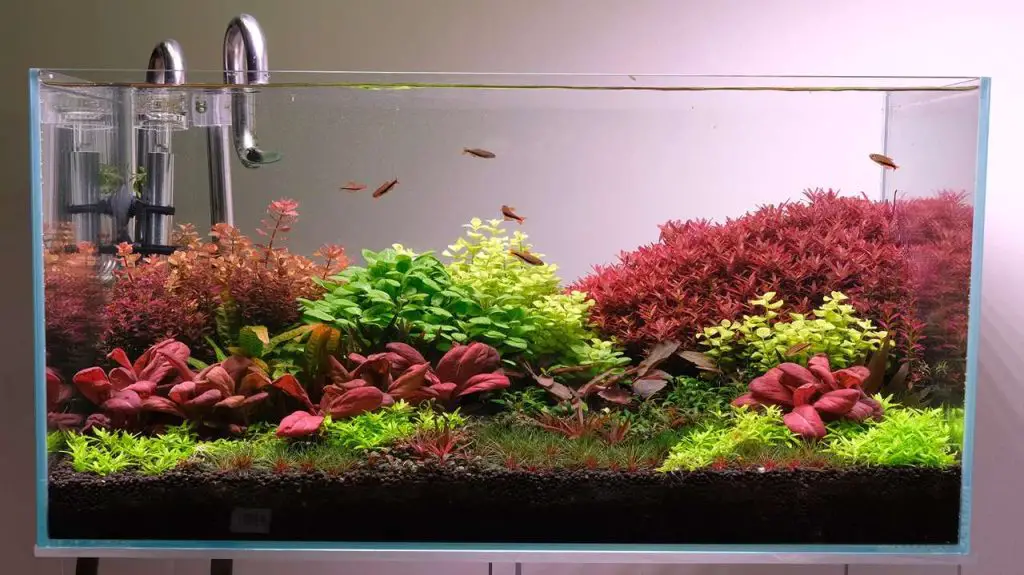
Even a strong LED light creates problems if it only covers part of the aquarium.
Corner plants get starved. Algae concentrates under the hotspot in the middle. The whole tank grows unevenly.
4.1 Importance of Even Light Distribution
Light spread matters more in wider tanks and larger aquascapes where plants are spread across the full footprint.
Tall aquariums with significant depth need lights positioned closer to the water surface rather than raised on stands. Raising the fixture reduces PAR at the substrate considerably.
A long LED bar that spans the full length of the aquarium usually distributes light more evenly than a compact unit centered over the tank.
For most planted aquariums, full-length coverage is worth prioritizing over a cheaper undersized option. Our guide on cheap aquarium lights covers what to look for at different budgets.
4.2 Methods to Prevent Light-Starved Areas
A few simple adjustments help:
- Use fixtures sized correctly for the aquarium
- Avoid overcrowding floating plants
- Position the hardscape carefully
- Use multiple fixtures on larger tanks
Many plant problems blamed on the spectrum are actually caused by poor light distribution.
Once lighting reaches the whole aquarium, plant selection starts becoming the biggest factor.
5. Selecting Suitable Plant Types
Some aquarium plants are easy.
Others demand almost everything to be perfect.
5.1 Ideal Low-Light Aquarium Plants
These plants work well in most beginner-planted aquariums:
| Plant | Difficulty |
| Anubias | Easy |
| Java Fern | Easy |
| Java Moss | Easy |
| Bucephalandra | Easy |
| Hornwort | Easy |
| Water Sprite | Easy |
| Cryptocoryne Wendtii | Easy |
Many of these grow successfully under standard LED aquarium lights.
5.2 Challenging Plant Species and Their Light Needs
Some plants need considerably more light.
High-end aquascaping plants, carpeting plants, and many red species usually demand:
- Stronger light intensity
- Better fertilizer routines
- Stable lighting parameters
- Balanced nutrients
Good LEDs can grow them, but the margin for error becomes smaller.
Once plant selection matches the aquarium, small lighting adjustments become much easier.
6. Adjusting Lighting Parameters
Most planted tanks improve through small adjustments, not major changes.
6.1 Customizing Lighting Periods for Plant Health
Longer lighting periods do not always mean faster growth.
Most planted aquariums do well with roughly:
- 6 to 8 hours for newer tanks
- 8 to 10 hours for established planted tanks
Running lights all day usually creates algae before it improves plant growth.
6.2 Modifying Light Intensity and Color Settings
Most mid-range planted aquarium LEDs now include dimmable controllers for adjusting brightness as a percentage. That is useful for several reasons.
Starting a new tank at a lower intensity and increasing gradually as the nitrogen cycle establishes helps avoid early algae spikes.
Running different intensity zones within a larger aquascape lets demanding foreground plants get more light without overwhelming low-light background plants.
Matching intensity to CO2 levels matters too. Higher CO2 supports higher light without algae dominating.
Some lights also allow adjusting color channels separately, which lets you boost red wavelengths for plant growth or shift the appearance of the tank for different viewing conditions.
Once adjustments become automatic, smart lighting systems start making life easier.
7. Exploring Smart Lighting Solutions
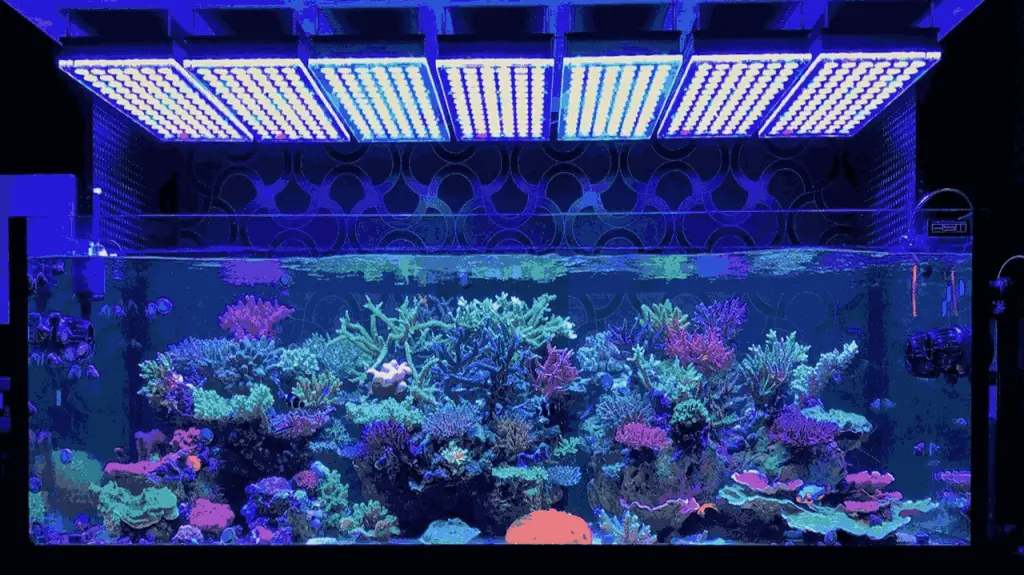
Modern aquarium lights can do much more than simply turn on and off.
7.1 Advantages of Automated LED Systems
Smart lighting systems help create consistency.
Many can:
- Automate schedules
- Control brightness
- Simulate sunrise and sunset
- Reduce sudden lighting changes
That consistency often helps both plants and fish.
7.2 Popular Smart Lighting Applications and Features
Most modern smart aquarium LEDs offer mobile app control through Bluetooth or Wi-Fi, pre-set modes for planted, marine, and freshwater setups, and scheduling that supports multiple lighting segments per day.
Weather simulation modes, where the light dims and flickers briefly to mimic cloud cover, are popular in the aquascaping community for adding a natural feel to displays.
For high-tech planted aquariums running CO2 injection and fertilizer dosing on a schedule, tying the light intensity to the CO2 timer is straightforward with smart systems.
CO2 usually runs a couple of hours into the photoperiod and shuts off before lights out, so the light and CO2 peak together.
8. Balancing Aesthetics and Functionality
Good aquarium lighting should grow plants and look good.
Ideally, it does both.
8.1 Aligning Light Settings with Aquarium Design
Different aquascaping styles often use different lighting approaches.
Nature-style aquariums, heavily planted tanks, and minimalist layouts all benefit from slightly different intensity and spectrum settings.
The goal is to support plant growth without making the aquarium look unnatural.
8.2 Enhancing Aquarium Ambiance through Lighting Choices
Color temperature changes how the aquarium feels.
Cooler white lights often make greens appear brighter.
Warmer settings create a softer appearance.
Many aquascapers adjust lighting partly for plant growth and partly for visual presentation.
Once you understand the basics, installing LED lighting becomes fairly straightforward.
9. DIY Tips for LED Installation
Standard aquarium LED bars are not complicated to set up. Most people get it right the first time.
The mistakes that come up usually involve the things people assume do not matter. They do.
9.1 Step-by-Step Guide to Setting Up LED Lights
A simple setup usually looks like this:
- Install the fixture securely.
- Position it for even light spread.
- Set a consistent lighting schedule.
- Observe plant response for a few weeks.
- Adjust intensity only if necessary.
Most planted tanks need patience more than constant tweaking.
9.2 Common Mistakes to Avoid in LED Installation
Common beginner mistakes include:
- Leaving lights on too long
- Buying more intensity than needed
- Ignoring light spread
- Changing settings every few days
- Expecting lighting alone to fix plant issues
Healthy aquarium plants depend on the entire system working together.
Conclusion
LED lights can grow aquarium plants without much trouble when the setup is balanced.
Most problems people blame on the light are actually nutrient issues, CO2 gaps, or photoperiod mistakes. Getting those sorted matters as much as choosing the right light.
Start with plants that match your current intensity. Get the photoperiod on a consistent timer. Do not run more hours than the tank can handle.
From there, if you want to push into more demanding aquascaping, upgrading the light is a clearer step once everything else is already working.
FAQ’s:
Yes. Most modern full-spectrum LED aquarium lights deliver the wavelengths plants need for photosynthesis. The key is matching light intensity and spectrum to your plant selection and tank depth.
Lights in the 6500 to 7000K range provide a balanced full spectrum close to natural daylight. That range supports plant growth well and looks natural inside the aquarium.
Low-light plants like Anubias and Java fern grow well at 15 to 50 PAR. Medium-light plants need 50 to 150 PAR. High-light aquascaping plants need 150 PAR and above, usually alongside CO2 injection.
8 to 10 hours is the standard for most planted aquariums. Running beyond 10 hours consistently tends to favor algae over plant growth unless CO2 and nutrients are in very good balance.
Sometimes, but it is not recommended. Generic flood lights usually lack proper spread, aquarium-appropriate spectrum, and waterproofing. Aquarium-specific LEDs are designed for the environment.
Check intensity first. Many budget LEDs do not deliver enough PAR at substrate depth. Also check photoperiod consistency, CO2 levels, nutrient availability in the water column and substrate, and whether your plant selection actually matches your light output.
Amazon and the Amazon logo are trademarks of Amazon.com, Inc, or its affiliates