
As an Amazon Associate I earn from qualifying purchases.
If you are an enthusiast within the aquarium hobby, you have likely faced the sudden, overwhelming appearance of pest snails in your tanks.
Among the various solutions presented, Assassin snails (Anentome helena) are frequently touted as the ultimate biological janitors.
However, there is a pervasive and dangerous myth circulating in online forums: that these carnivorous mollusks also clean algae from glass and décor. It is time to set the record straight.
While these snails are indispensable for the biological control of freshwater snails, they are not part of any “algae-eating crew.” Misunderstanding their dietary requirements can lead to poor health, shell decay, and, ultimately, the premature loss of your pets.
1. The Short Answer: Do Assassin Snails Actually Eat Algae?
To be blunt: No. Assassin snails do not eat algae. They are strict, obligate carnivores. While you may occasionally observe them crawling over aquarium plants or glass covered in green fuzz, they are foraging for microscopic animal proteins or detritus, not plant matter.
Assuming these snails will supplement their diet with algae is a major oversight. If you introduce them to a tank with no prey and no supplemental protein, you are essentially starving them.
They are not an alternative to Nerite snails or other herbivorous species that actually serve to clear aquarium glass and surfaces of algae.
1.1 Why the Algae Myth Persists
The myth likely gains traction because of the visual similarities between Clea Helena and other popular snails.
Because they inhabit the same tank size and often share space with Mystery snails or other common aquarium species, hobbyists conflate their behaviors.
When an owner sees their snails traversing an algae-covered surface, they incorrectly assume the snail is feeding. In reality, the snail is merely transiting to a more promising hunting ground.
1.2 The Biological Reality of Clea Helena
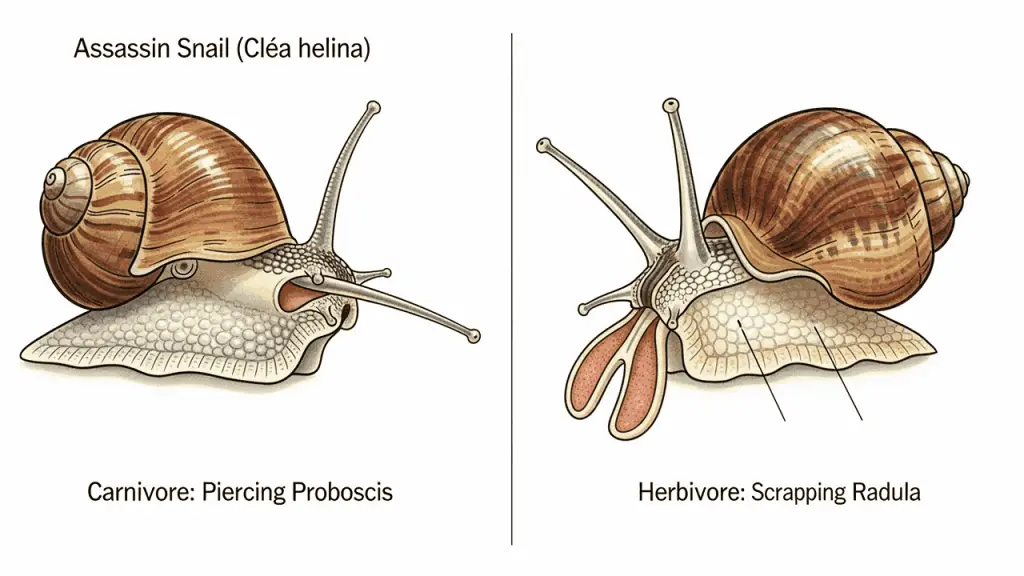
Anatomical differences dictate their diet: Assassin snails possess a specialized proboscis for hunting prey and lack the scraping radula required to consume algae.
Biologically, the Assassin snail is a specialized predator. Their mouthparts are designed for one purpose: piercing the soft tissue of other snails.
They lack the digestive enzymes required to process cellulose or complex plant carbohydrates found in algae.
When we evaluate their biological and biomechanical principles, it becomes clear that they are evolutionary marvels for hunting, not grazing.
2. Meet the Assassin Snail: Origin and Anatomy
2.1 Geographic Roots: From South-East Asia to Your Aquarium
Anentome helena, commonly known as the Assassin snail, is native to the tropical climates of South-East Asia, including regions in Peninsular Malaysia and the reservoir of lower Northeast Thailand.
These environments are typically slow-moving freshwater systems where the substrate is soft and muddy, allowing them to thrive by burrowing.
Understanding their origin helps keepers replicate the ideal tank parameters for their longevity.
2.2 Physical Characteristics: Shell Stripes and the Operculum
The most striking feature of the Assassin snail is its vibrant, dark brown and yellow spiral shell stripes. This pattern serves as a warning in nature and an aesthetic highlight in the aquarium.
They also possess an operculum—a hardened “door”—that they use to seal their shell shape completely when threatened, providing protection against curious fish or during periods of unfavorable water conditions.
2.3 Specialized Hunting Tools: The Proboscis and Radula
The “Assassin” moniker is well-earned. These snails utilize an elongated, flexible proboscis to reach deep into the shells of their prey.
Once they reach the soft tissue, they employ a specialized, rasping radula to extract nutrients. This process is highly surgical, allowing them to remain efficient even against pest snail populations that might otherwise be untouchable.
3. The Carnivorous Diet: What Assassin Snails Really Eat
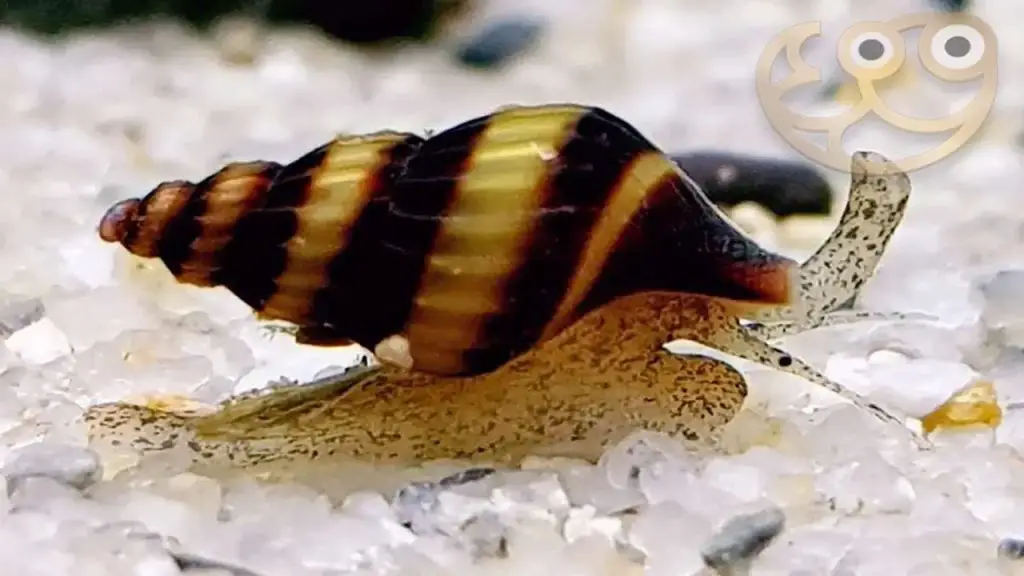
3.1 Natural Prey: Pest Snail Populations (Bladder, Ramshorn, and Trumpet Snails)
Assassin snails are the premier solution for pest snail populations. They aggressively hunt Bladder snails, Pond snails, and ramshorn snails.
Their ability to stabilize an ecosystem that has been overrun is why they remain a staple in the aquarium hobby.
They effectively target the most common hitchhikers, keeping your aquarium plants and decor free from uncontrolled reproduction.
3.2 Dealing with “Hard-Shelled” Targets: Malaysian Trumpet Snails (Melanoides tuberculata)
The Malaysian Trumpet snail—also known as Tarebia granifera in some contexts—is notoriously difficult to eradicate due to its tough, spiral, and elongated shell.
Because these trumpet snails spend much of their time buried in the substrate, they often escape most predators.
Assassin snails are uniquely qualified to hunt these resilient mollusks, though they may take more time to breach the harder shell.
3.3 Do They Eat Snail Eggs?
Beyond hunting adults, Assassin snails are highly effective at limiting future generations by consuming the eggs laid by other freshwater snails.
By patrolling the glass and undersides of broad-leafed plants, they interrupt the life cycle of pest species, effectively preventing the “boom-and-bust” cycles that often lead to excessive nitrates and biological instability.
4. Supplemental Feeding: Sustaining Your Assassins After the Pests Are Gone
4.1 High-Protein Alternatives: Bloodworms and Brine Shrimp
What happens when the “pest buffet” is over? You must transition your assassins to a prepared diet.
High-quality bloodworms and brine shrimp are excellent, protein-rich alternatives that mimic the nutritional profile of their natural snail prey.
4.2 Sinking Foods: Shrimp Pellets and Carnivore Wafers
To ensure your snails remain healthy, provide sinking shrimp pellets or carnivore-specific wafers.
Since these snails are not fast, you must ensure the food is placed within their reach, perhaps using a target-feeding tube to prevent more active fish from consuming the food first.
4.3 Can They Survive on Biofilm or Detritus?
While Assassin snails may consume small amounts of detritus in a pinch, it is insufficient to support their long-term growth and reproduction.
If you do not provide supplemental protein, your snail population will likely decline in health, show signs of shell damage, or eventually perish.
5. The Mechanics of the Hunt: Ambush and Burrowing Behaviour
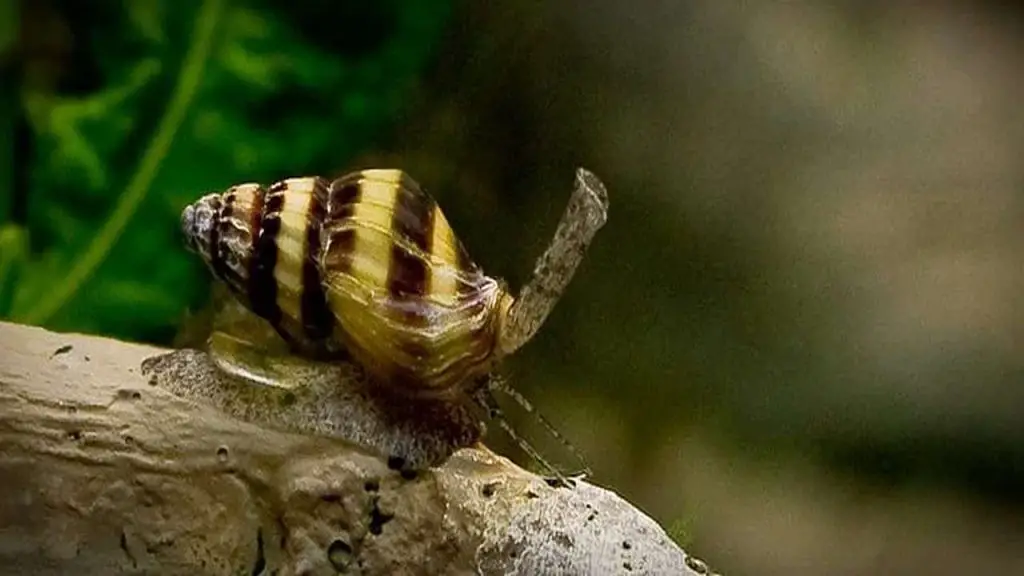
5.1 Substrate Selection: Why Sand Matters for Burrowing
Because these snails originate from regions with soft, silty bottoms, they require a fine-grained sand substrate to exhibit their natural behavior.
Keeping them on coarse gravel can inhibit their ability to burrow, leading to stress and reduced efficiency in hunting.
5.2 Stealth Tactics: The “Waiting Game” Under the Surface
Assassin snails are master ambush natural predators. They often spend the majority of the day buried beneath the sand, with only their sensory siphons extended to detect the chemical signatures of passing prey.
This “waiting game” is a natural, healthy behavior; a buried snail is a happy, secure snail.
6. Tank Mate Compatibility: The Safety Matrix
6.1 Are Shrimp Safe? (Neocaridina and Caridina Interactions)
In a well-fed tank, Assassin snails usually coexist peacefully with dwarf shrimp. However, the risk factor increases if the snails are starving.
A molting shrimp is slow and vulnerable; if your Assassin snails are hungry, they may not distinguish between a pest snail and your expensive shrimp colony. Maintain high protein levels to ensure your shrimp remain safe.
6.2 The Mystery Snail and Nerite Snail Dilemma
Never house Assassin snails with Mystery snails or Nerite snails. These decorative species are far too slow and often have exposed soft parts, making them easy targets for an Assassin snail’s predatory instinct.
6.3 Interactions with Bottom Dwellers: Cory Catfish and Ancistrus Fry
Small, bottom-dwelling fish such as Cory Catfish and Ancistrus fry are generally safe from Assassin snails.
The primary concern here is not predation, but nutritional competition. Ensure that bottom-feeding fish do not out-compete your snails for the supplemental pellets you provide.
6.4 Are They Effective Against Other Pests Like Planaria and Hydra?
While reports exist of them opportunistically targeting planaria or hydra, do not rely on Assassin snails as a primary control method for these pests.
They are evolved for mollusks, not microscopic invertebrates.
6.5 Water Chemistry: Why pH Levels Below 6.5 Are Dangerous
Maintaining proper Water Parameters is critical. A pH value below 6.5 will begin to dissolve the snail’s shell, leading to shell rot and eventual death. Keep your pH between 7.0 and 8.0 to ensure shell integrity.
6.6 Temperature and Lighting Requirements
Assassin snails thrive in tropical climates, preferring temperatures between 70°F and 80°F.
While lighting is not a concern for the snail, keep in mind that high-intensity lighting may encourage algae growth, which—as we’ve learned—is not a food source for these predators.
6.7 The Importance of Drip Acclimation
Like most sensitive invertebrates, Assassin snails should always be introduced to a new tank using drip acclimation. This prevents osmotic shock and allows them to adjust to the specific mineral content of your water.
6.8 The Role of Calcium Carbonate and Calcium Supplements
To prevent shell damage and thinning, ensure your water contains enough calcium.
Using crushed coral in your filter or adding Wonder Shells can provide the necessary calcium carbonate to maintain a thick, robust shell throughout the snail’s life.
Conclusion
Assassin snails are a fascinating addition to the aquarium hobby, serving as elite biological control agents against unwanted pest snails.
However, it is imperative to remember that they are not algae eaters. By understanding their needs—providing a soft sand substrate, maintaining stable water parameters with adequate calcium, and offering a supplemental protein-rich diet—you can ensure your snails live a long, healthy life.
Always prioritize the safety of your decorative Mystery snails and Nerite snails by keeping them well away from these predatory hunters.
With proper care, they are an asset to any well-managed ecosystem, helping you maintain a balanced and pest-free tank.
Always consult the U.S. Fish and Wildlife Service or local regulations regarding the transport of non-native species, and ensure you are sourcing your snails from reputable breeders.
Amazon and the Amazon logo are trademarks of Amazon.com, Inc, or its affiliates