
As an Amazon Associate I earn from qualifying purchases.
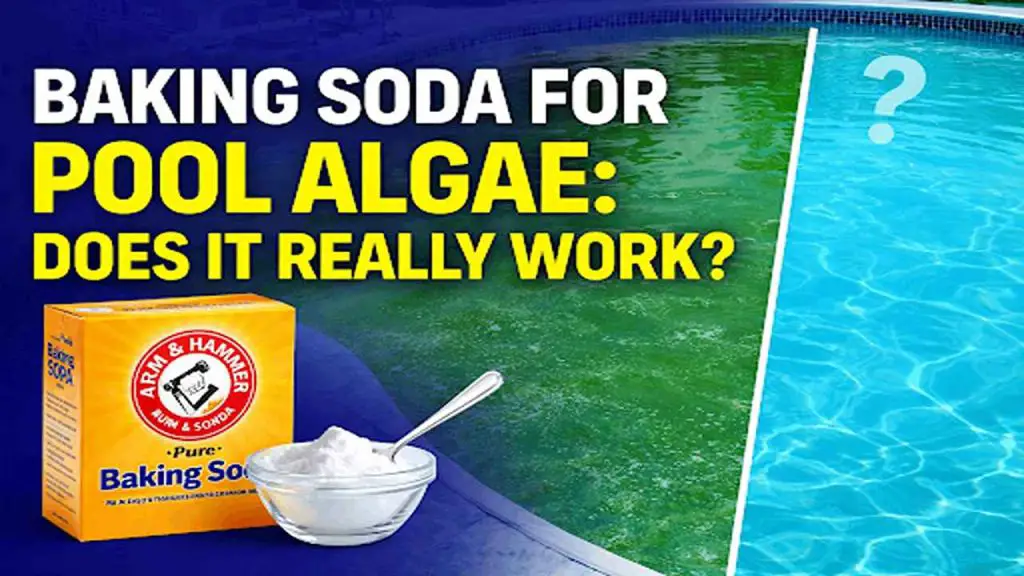
Baking soda for pool algae is not what people expect. It sits on the water balance side of things. It’s not an algae killer.
It’s expected to act like an algaecide, but that’s not what it does. What it actually changes is alkalinity.
And when alkalinity drops, the rest of the chemistry starts wobbling. pH won’t stay put. Chlorine gets inconsistent.
That’s usually when algae slips in. Not because baking soda failed, but because the water was already drifting.
That’s why baking soda keeps showing up in algae advice. It isn’t attacking algae directly. It’s helping the environment. Chlorine needs to work properly.
This guide explains where baking soda really fits into pool care and when it helps. When it doesn’t. And how to use it without accidentally chasing one problem and creating another.
1. How Algae Affects Pool Health
Algae in a pool usually shows up before people realize anything is wrong.
Water still looks mostly okay. Then the steps feel slippery. The walls start getting that faint green film.
A few days later, the filter is running nonstop, and the water won’t clear no matter how much chlorine you throw in.
At that point, it’s not just ugly water. Algae is eating sanitizer, clogging the system, and making the whole pool harder to balance.
Everything gets more expensive and more annoying the longer it sits there.
2. The Role of pH and Alkalinity in Pool Maintenance
A lot of “algae problems” are really water balance problems in disguise. The pool might look fine for a while, but underneath, the chemistry is already drifting.
2.1 Understanding pH Levels
pH is basically how sharp or soft your pool water feels chemically. It doesn’t take a huge change to cause trouble.
When pH creeps up, chlorine loses bite. You keep dosing the pool and wonder why the water still looks tired.
When pH drops too far, the water gets harsh. Eyes sting, surfaces dull, and metal parts don’t love it either.
The tricky part is how slow this happens. Pools rarely flip overnight. They drift. By the time you notice something looks off, the numbers have been sliding for a while.
2.2 The Importance of Alkalinity
Alkalinity is what keeps pH from acting jumpy. Without it, every little change pushes the water around.
Heavy rain, fresh fill water, and a busy weekend in the pool, all of it hits harder when alkalinity is low.
On the other side, if alkalinity runs too high, pH gets stubborn and refuses to move when you try to fix it.
When alkalinity sits where it should, the pool feels steady. Chemicals behave. Chlorine holds its strength. Algae have fewer easy chances to get started.
Balanced water doesn’t look exciting on a chart, but it’s what makes day-to-day pool care feel simple instead of constant repair.
3. How Baking Soda Works in Pools
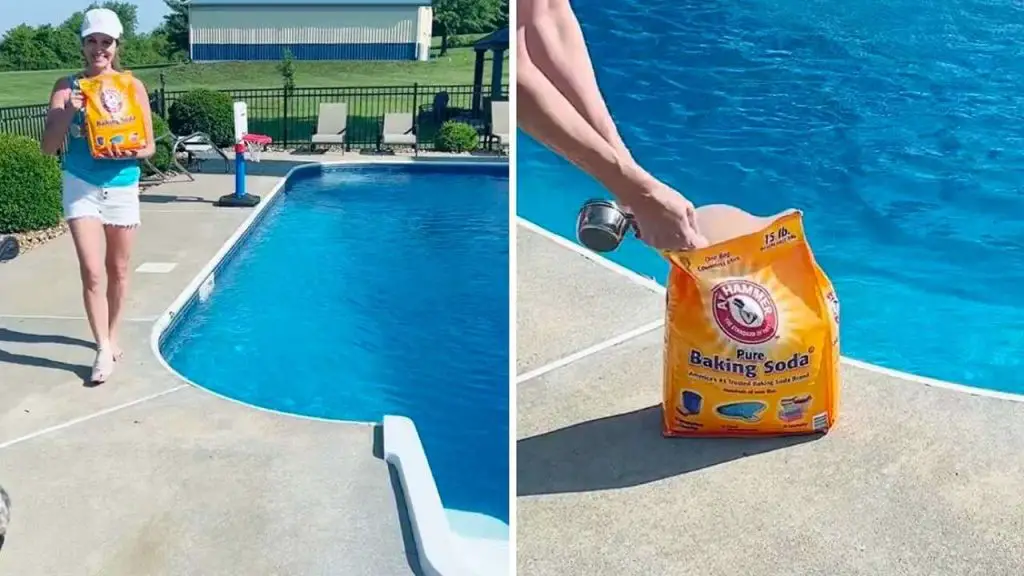
Baking soda in pools isn’t magic, and it isn’t an algaecide. It’s a water balance tool.
Sodium bicarbonate mainly affects alkalinity, which is why it shows up in almost every pool algae conversation.
3.1 Chemical Properties of Baking Soda
Baking soda is sodium bicarbonate. In pool water, it acts as a buffer.
That buffer slows down sudden chemistry swings. Instead of pH bouncing every time you add chlorine, top off the pool, or get hit by rain, the water absorbs the change more gently.
In simple terms:
- Low buffer = Jumpy water
- Stable buffer = Predictable water
Predictable water is easier to sanitize. And easier water is harder for algae to take advantage of.
3.2 Impact on Water Clarity and Corrosion
Baking soda doesn’t directly clear cloudy pools. What it does is fix conditions that lead to cloudy water in the first place.
When alkalinity is off, chlorine becomes inconsistent. That’s when water turns dull, filters clog faster, and surfaces start feeling rough.
Balanced alkalinity helps:
- Chlorine stays effective
- Particles filter out properly
- Metal parts resist corrosion
- Plaster and liners last longer
You’re not polishing the water. You’re stabilizing the system that keeps it clear.
3.3 Raising pH and Alkalinity with Baking Soda
Baking soda raises alkalinity first and pH second. That order matters.
Many pool owners expect a big pH jump and get confused when it moves slowly. That’s normal. Sodium bicarbonate is gentle.
It’s designed to lift Total Alkalinity without spiking the pool into a new problem.
A rough rule pool techs use:
| Goal | What Baking Soda Mainly Changes |
| Stabilize water | Raises Total Alkalinity |
| Minor pH support | Slight pH increase |
| Algae prevention | Indirect, through balance |
It’s a support chemical, not a shock treatment.
And once the water is stable, the next step is knowing when and how to actually use it during maintenance.
4. Using Baking Soda to Combat Algae
Baking soda for pool algae is about support, not attack.
It helps chlorine work better by stabilizing pool water, but it doesn’t replace brushing, shocking, or proper filtration.
4.1 Treating Different Types of Algae
Not all pool algae behaves the same, and baking soda plays a slightly different role depending on what you’re dealing with.
Green algae (most common)
- Spreads fast in unbalanced pool water
- Baking soda helps stabilize alkalinity, so chlorine holds longer
- Still requires brushing + shock treatment
- Clings to shady pool walls and steps
- Needs aggressive brushing and stronger chlorine levels
- Baking soda helps prevent rebound by keeping chemistry steady
- Roots into pool surfaces
- Requires scrubbing, targeted algaecide, and repeated shock
- Baking soda is background support, not the main fix
Baking soda is never the killer. It’s the assistant that keeps conditions from sliding backward after treatment.
4.2 Advantages of Baking Soda Over Traditional Chemicals
There’s a reason sodium bicarbonate is a staple in pool care kits.
- Gentle on pool surfaces
- Safer to handle than harsh acids
- Inexpensive and easy to find
- Predictable effect on Total Alkalinity
- Reduces chemistry swings after treatment
Many commercial alkalinity increasers are just branded baking soda at a higher price.
It’s simple chemistry, not a specialty product.
4.3 Limitations of Baking Soda
This is where most online advice goes wrong.
Baking soda will not:
- Kill active algae blooms
- Replace chlorine
- Clear a green pool on its own
- Fix filtration problems
- Substitute for brushing or vacuuming
If algae is visible, you still need shock treatment and mechanical cleaning. Baking soda only supports the recovery by stabilizing the water after the kill phase.
Used correctly, it prevents repeat outbreaks. Used alone, it does almost nothing.
And once you understand its limits, the next step is learning how to add it properly without overshooting your chemistry.
5. Steps for Incorporating Baking Soda in Pool Maintenance
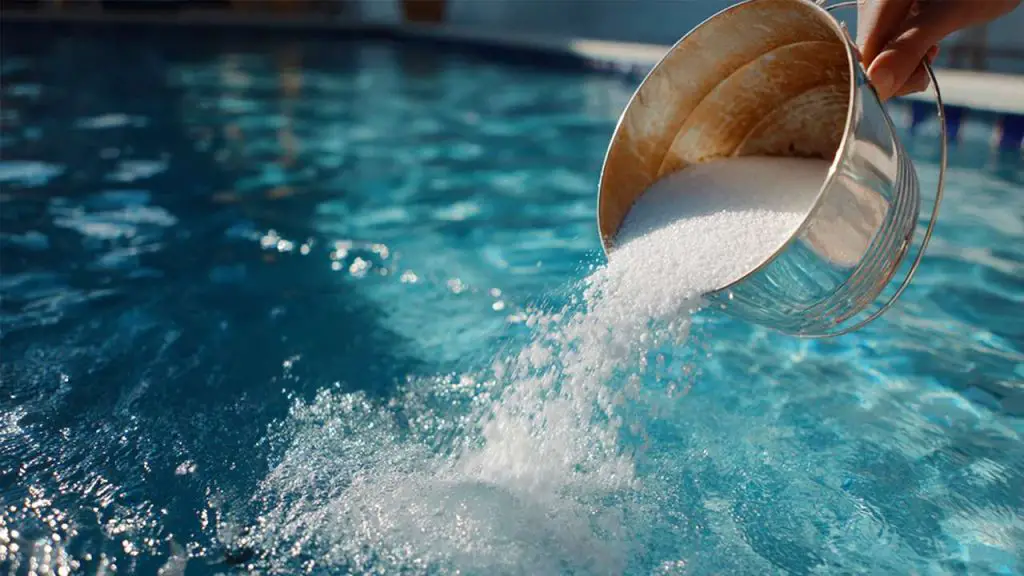
Baking soda isn’t something you toss in on a schedule. You use it when the water tells you it needs it. The whole trick is test first, adjust second
5.1 Testing pH and Alkalinity Levels
Before adding baking soda, check the water. Every time.
Strips are fine for a quick look, but a liquid test kit is easier to trust when numbers matter. You’re watching two things:
- pH should sit around 7.2 to 7.6
- Total alkalinity usually lives between 80 and 120 ppm
When alkalinity drops, the pool starts acting weird. pH jumps around, chlorine feels weak, and algae gets a better shot at taking hold. That’s your cue; baking soda might help.
If alkalinity is already high, adding more just creates new problems. So testing isn’t busywork. It’s how you avoid chasing your own tail.
5.2 Exact Measurements for 0Usage
There’s no magic scoop. It depends on the pool size.
A rough field rule many pool techs use is about 1.5 pounds of baking soda per 10,000 gallons to raise alkalinity around 10 ppm. But don’t dump it all in and hope for the best.
Add a little. Let it circulate. Test again.
Most chemistry mistakes come from adding too much too fast. Slow adjustments are boring, but boring is how pools stay stable.
5.3 Frequency of Application
You don’t add baking soda weekly like chlorine tabs. Some pools go weeks without needing it.
Others need small tweaks during heavy use.
You’ll usually see changes after:
- Big rainstorms
- Large water top-offs
- Pool parties
- Heat waves
Regular testing keeps the corrections small. Small corrections are cheap and easy. Big swings turn into cleanup jobs.
And once the dosing feels predictable, the real goal becomes keeping the pool steady enough that algae never gets a head start.
6. Integrating Baking Soda with Other Treatments
Baking soda works best as part of a system, not a solo fix. It supports water balance, so the heavy hitters like chlorine, brushing, and algaecides can actually do their job.
6.1 Combining with Pool Shocking
If the pool is already green, baking soda isn’t the first move. Shock comes first.
Superchlorinating wipes out active algae. Baking soda comes in after, once the water settles, and you can see where alkalinity landed. Shocking can swing chemistry around, and that’s when baking soda helps stabilize things again.
Think of shock as the reset button and baking soda as the fine-tuning.
Order matters. Shock → circulate → test → adjust.
6.2 Regular Brushing and Cleaning Techniques
Chemicals alone don’t win against algae. You still have to physically break it loose.
Brushing pool walls, steps, and corners exposes algae to sanitizer. If it stays stuck to surfaces, chlorine has a harder time reaching it. A good brushing session often clears more than people expect.
Pair that with:
- Vacuuming debris
- Emptying the skimmer
- Backwashing the filter
- Keeping circulation steady
Clean surfaces plus balanced water give algae fewer places to hide.
6.3 Use with Commercial Algaecides
Algaecides are support tools, not replacements for balance.
If alkalinity and pH are off, even a strong algaecide struggles. Balanced water lets those products work at their intended strength instead of fighting unstable chemistry.
Used together correctly:
- Baking soda stabilizes alkalinity
- Chlorine sanitizes
- Algaecide prevents regrowth
Each has a role. None of them fixes the pool alone.
Next comes monitoring and adjustment, which is where most long-term pool stability is decided.
7. Monitoring and Adjusting Pool Conditions
Pool chemistry drifts slowly. The water rarely flips overnight. Most problems give small warning signs first. Catch them early, and the fixes stay simple.
7.1 Signs of Alkalinity Imbalance
When alkalinity slips out of range, the pool starts acting inconsistently.
Low alkalinity usually shows up as:
- pH bouncing around from test to test
- Chlorine burning off faster than normal
- Irritated eyes or skin
- Metal parts dulling or spotting
High alkalinity looks different:
- Cloudy pool water that won’t clear
- Scaling on pool surfaces or tiles
- Stiff, rough-feeling walls
- Filters clogging faster than usual
The pool still runs, but it feels harder to manage. You keep adding chemicals, and nothing sticks.
That’s almost always a balance problem, not a sanitizer problem.
7.2 Corrective Actions for Overuse
Too much baking soda is fixable. It just takes patience.
If alkalinity climbs too high:
- Stop adding alkalinity increaser
- Let the normal splash out and refill, dilute the water
- Use small doses of muriatic acid or sodium bisulfate if needed
- Retest after circulation before adjusting again
Big corrections create big swings. Small corrections bring the water back without starting another chemistry spiral.
Most overcorrections happen when people try to rush the pool back into range. Slow testing and gradual changes keep the system predictable.
And once monitoring becomes routine, long-term pool care turns into maintenance instead of repair.
Conclusion
Baking soda for pool algae isn’t a magic cure, but it plays an important support role. It stabilizes alkalinity, keeps pH from swinging, and helps chlorine work the way it should.
When the water balance is steady, algae have fewer chances to take over.
Most pool problems blamed on chemicals are really balance problems underneath.
Testing regularly, adjusting slowly, and combining baking soda with proper cleaning and shocking keep pool water predictable.
Predictable water is easier, cheaper, and a lot less frustrating to manage.
FAQ’s:
No. Baking soda doesn’t kill algae directly. It stabilizes Total Alkalinity, which helps chlorine stay effective. Chlorine is what actually kills algae. Baking soda just supports the chemistry that lets chlorine do its job.
Let it circulate for at least 4 to 6 hours before retesting. Many pool owners wait a full day for a stable reading. Circulation time depends on pool size and pump strength, but the goal is full mixing before making another adjustment.
Shock treatment combined with brushing and strong filtration. You need to kill the algae, break it loose from surfaces, and filter it out. Balanced alkalinity helps the shock work better, but the shock and cleaning are what clear the bloom.
Indirectly. Baking soda raises alkalinity first, and alkalinity helps control pH swings. It won’t force pH into range by itself like muriatic acid or soda ash, but it makes pH easier to stabilize afterward.
Amazon and the Amazon logo are trademarks of Amazon.com, Inc, or its affiliates