
As an Amazon Associate I earn from qualifying purchases.
If you’ve ever walked out to your backyard and found your pool water looking green or cloudy, you’re not alone. Algae can grow rapidly, and once it start growing, it spreads quickly.
It clings to the pool surfaces, climbs the walls, and makes your water look anything but inviting.
Some folks reach straight for the pool care shock treatments. Others try scrubbing or running the filter nonstop. But one thing that often comes up in pool maintenance talk? Muriatic acid.
This strong, liquid pool chemical is mostly used to lower pH and clean surfaces, but many pool house owners also swear by it as part of their fight against algae growth.
In this article, we’ll break down what muriatic acid does, how it fits into your regular pool maintenance routine, and what to watch for when using it.

Understanding Pool Chemistry
Before adding anything to your pool, especially something as strong as muriatic acid, it’s worth understanding how pool chemistry actually works.
A. The Role of pH Balance
Your pool’s pH level tells you how acidic or basic the water is. A pH of 7.0 is neutral. For swimming pools, the ideal range sits between 7.2 and 7.6.
Too high, and chlorine won’t work properly. Too low, and the water becomes corrosive, irritating skin and eyes, and damaging your pool equipment over time.
Muriatic acid comes into play when your pH creeps too high. It’s a strong acid that lowers pH fast, helping you get back into the safe zone.
B. The Importance of Alkalinity Control
Total alkalinity acts like a cushion for your pH, keeping it from swinging up or down too quickly. When alkalinity is off, even small chemical changes can throw your pH way out of balance.
- Ideal alkalinity: 80–120 ppm
- If it’s too high, pH gets stuck high
- If it’s too low, pH becomes unstable
Muriatic acid lowers both pH and alkalinity, which makes it useful for rebalancing water chemistry when both levels are elevated.
Next, let’s see how muriatic acid aids in algae prevention and why it’s not a standalone solution, but rather part of a broader strategy.
Muriatic Acid and Algae Prevention
Algae is a sign that your pool’s chemistry is off. High pH, poor chlorine performance, and inconsistent cleaning give algae the perfect environment to take hold.
A. How Muriatic Acid Works Against Algae
Muriatic acid doesn’t kill algae on its own. It creates a better environment for other treatments, like chlorine tab, to work effectively.
Here’s how:
- Algae thrive in high-pH water. Muriatic acid lowers the pH, making your pool less welcoming to new growth.
- When pH is too high, chlorine loses its punch. By lowering the pH, muriatic pool acid helps chlorine work more effectively, resulting in improved sanitation with the same amount of product.
- It also reduces calcium buildup, which often traps organic material on surfaces, a common place for algae spores to settle.
So while muriatic acid won’t zap algae blooms on contact, it makes your pool water a much harder place for it to survive.
B. Creating an Algae-Resistant Environment
Muriatic acid is most useful when used as part of a larger algae prevention routine. That includes:
- Regular pH and alkalinity checks (2–3 times per week during peak season)
- Keeping chlorine in the optimal range (1–3 ppm for most pools)
- Brushing walls and the pool floor weekly to dislodge spores
- Cleaning the pool filter regularly to remove trapped debris
- Ensuring good water circulation to avoid stagnant spots
When combined with proper cleaning and chlorine levels, muriatic acid helps maintain a healthy pool environment where algae can’t take hold as easily.
Now we know how muriatic acid works, let’s see how to use it safely next.
Safe Application of Muriatic Acid
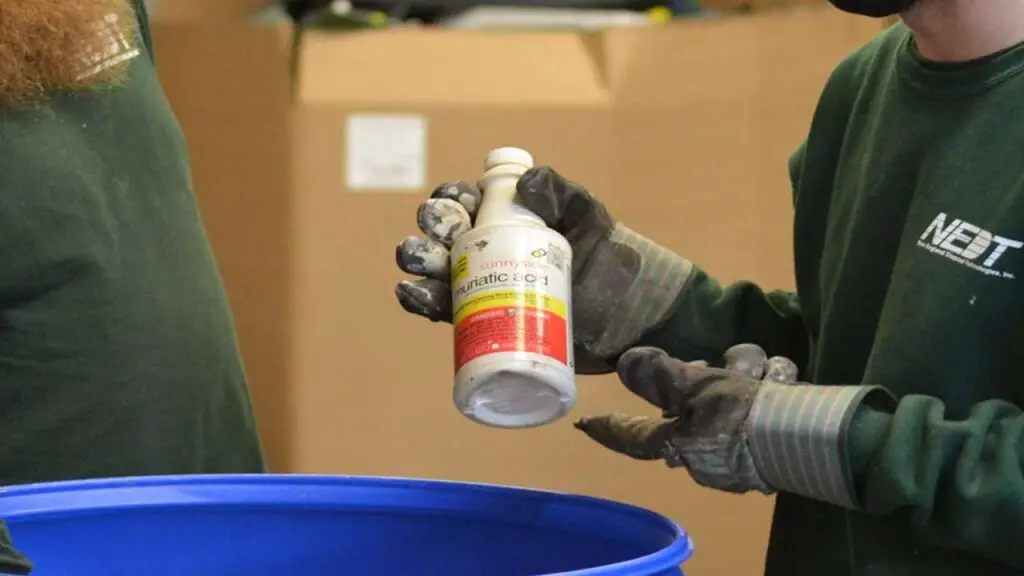
If you’re using muriatic acid in your pool, it’s not something to just eyeball and pour in. You’ll want to get the amount right, and more importantly, handle it with care.
A. Figuring Out the Right Amount
Start by testing your water. If your pH level is sitting too high, say above 7.8, adding some acid can help bring it back down.
Here’s a simple reference for a 10,000-gallon pool:
| Starting pH | Goal pH | Estimated Acid Needed |
| 7.8 | 7.4 | About 10 ounces (¾ cup) |
| 8.0 | 7.4 | Around 16 ounces (1 pint) |
| 8.2 or higher | 7.4 | 20–24 ounces |
You don’t need to be exact to the decimal, but don’t go overboard either. It’s always better to start small, test again, and adjust if needed.
B. How to Add It Without Messing Things Up
Once you’ve measured what you need, here’s how to use it:
- First, test your water and turn on your pool pump. You want the water circulating.
- Put on gloves and something to protect your eyes.
- If you’re diluting it, add acid to water, not the other way around. Always.
- Slowly pour it into the deep end, near one of the return jets.
- Let the pump run for about an hour before swimming or retesting your water.
If you’re unsure, a pool calculator app can help double-check the dose based on your exact numbers.
C. A Few Safety Reminders You Shouldn’t Skip
Even though it’s sold at most pool stores, muriatic acid is still a harsh chemical. Here’s how to stay safe:
- Store it somewhere cool and out of reach, upright, with the cap tight.
- Don’t mix it with anything else. Ever. Especially not pool shock.
- Keep the bucket or jug away from your face when pouring.
- Rinse anything it touches, tools, the deck, even your hands, right away.
- If you spill it, hose it down immediately with clean water.
If any gets on your skin or in your eyes, rinse and don’t wait, get it looked at.
Next up, we’ll cover what to do if you added too much acid, your pool goes cloudy, or you’re seeing signs of corrosion in your gear.
Troubleshooting Common Issues
Even when you do everything by the book, sometimes things still don’t go as planned. Here’s how to spot and fix the most common hiccups.
A. Dealing with Overacidification
Adding too much acid is one of the most common mistakes. You might notice:
- The pH dropped below 7.0
- Swimmers complain of eye irritation or dry skin
- Metal parts in your system start showing rust or corrosion
If you think you’ve added too much acid:
- Test your pH and alkalinity right away with a test kit
- If pH is under 7.0, add soda ash (sodium carbonate) slowly to bring it back up
- Keep the pump running and wait 1–2 hours before retesting
- Avoid using the pool until the water is back in a safe range (7.2–7.6)
B. Impact on Water Clarity
It’s not unusual for water to look a bit cloudy after using acid, especially if it was poured too quickly or too close to a return jet.
To clear things up:
- Keep your filter running, ideally 24 hours after treatment
- Brush the pool floor and walls to help mix and move stagnant spots
- Backwash your pool filter if the pressure has increased
- Use a clarifier if cloudiness lingers more than a day or two
Cloudy water doesn’t always mean something’s wrong, but it’s a sign to keep an eye on your pool water balance.
C. Protecting Pool Equipment
Muriatic acid is helpful, but it’s also corrosive, especially if used too often or without proper dilution. It can eat away at metal parts, etch plaster, and shorten the life of your pump or heater.
Here’s how to protect your gear:
- Never pour acid near metal surfaces or directly into the pool skimmer
- Always dilute if the label recommends it
- Use it as part of your pool maintenance routine, not a daily fix
- Rinse tools, buckets, and measuring cups right after use
- If you’re unsure, consult a pool service professional
It’s all about balance: enough to help, not enough to harm.
Next, we’ll look at how muriatic acid stacks up against other options, including milder pH adjusters and alternative solutions for controlling algae and keeping your pool water stable.
Comparing Muriatic Acid to Other Solutions
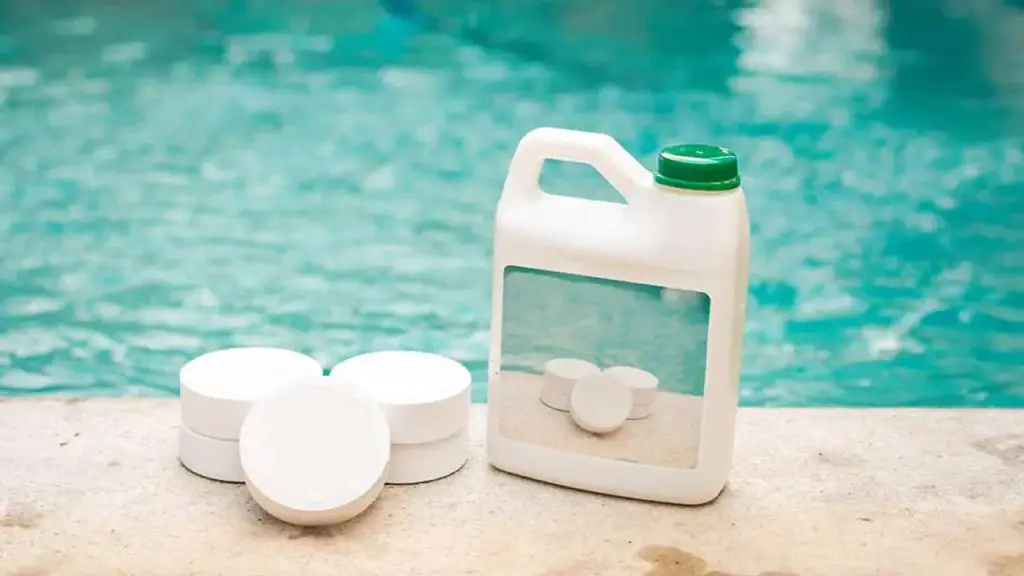
Muriatic acid is powerful, but it’s not your only option when it comes to pool maintenance. Depending on your comfort level, pool type, and goals, other choices may be a better fit.
A. Alternatives for pH Adjustment
Here’s a quick side-by-side look at how common pH-lowering products compare:
| Product | Form | Strength | Ease of Use | Best For |
| Muriatic Acid | Liquid | Very strong | Requires safety gear | Fast pH drops, experienced pool owners |
| Sodium Bisulphate | Dry powder | Moderate strength | Easier to handle | Smaller pH adjustments, safer for DIY users |
| Citric Acid | Powder | Mild | Very safe | Removing stains, minor adjustments |
| CO₂ Injection | Gas system | Precise | Specialized setup | Commercial or advanced pool systems |
Tip: If you're nervous about handling strong acids, sodium bisulfate might be a better pick. It may require larger amounts and more time to adjust your pool pH level.B. Effectiveness in Algae Prevention
While muriatic acid won’t eliminate algae on its own, it helps build an environment where algae growth is less likely. Here’s how it stacks up when used as part of your maintenance plan:
| Treatment | Kills Algae Directly? | Supports Algae Prevention? | How It Helps |
| Muriatic Acid | No | Yes | Improves chlorine efficiency by lowering pH |
| Pool Shock | Yes | Yes | Oxidizes and kills visible algae |
| Algaecide | Yes (varies by type) | Yes | Targets stubborn algae strains |
| Consistent Brushing | No | Yes | Removes buildup where algae spores can grow |
| Proper Circulation | No | Yes | Prevents stagnant zones in the water |
Use muriatic acid to keep your pool chemistry in balance, but pair it with brushing, filtration, and the occasional shock to keep algae from taking hold.
Conclusion
Muriatic acid has its place in pool care, but like most pool chemicals, it’s all about how you use it.
When handled properly, it’s a reliable way to adjust your pH levels, support chlorine efficiency, and help keep algae growth in check.
Still, it’s not a fix-all. You’ll get the best results when it’s part of a routine: regular testing, good circulation, brushing, and balanced chemistry.
And when in doubt, don’t hesitate to talk to a pool service professional, especially if you’re dealing with stubborn algae or unsure about dosing.
At the end of the day, the goal is simple: a clear, clean, and healthy pool conditions that’s safe for everyone to enjoy.
FAQ’s
Not directly. Muriatic acid doesn’t kill algae on its own, but it helps your pool chemicals — like chlorine — work more effectively by lowering the pH level. This creates a less friendly environment for algae to grow.
It depends on your pool’s size and current pH. For a 10,000-gallon pool, small pH corrections usually call for around 10 to 24 ounces of full-strength acid. Always test your water first and start with a conservative amount.
It’s best to wait. Let the pool pump circulate the acid for at least 30 to 60 minutes, then recheck your pH before swimming. Never swim if the pH is below 7.0.
Yes, but follow safety steps closely. Add acid slowly near a return jet, wear protective gear, and never mix it with other pool chemicals. Always add acid to water — not water to acid — if you need to dilute it.
If your pH level drops too low, use a base like sodium carbonate (soda ash) to bring it back up. Keep the pump running, and retest after an hour or two to make sure your levels are back in range.
Yes. Sodium bisulfate is a gentler option for lowering pH, though you’ll need to use more of it. It’s easier to handle and safer to store, especially for DIY pool owners who prefer to avoid strong acids.
Amazon and the Amazon logo are trademarks of Amazon.com, Inc, or its affiliates